Statues. Put them up. Pull them down
Tuesday, 16th June 2020
From time immemorial……statues, memorials, Idols, churches, monuments, headstones, images, plaques, flags, maps, drawings have been fashioned for a variety of reasons:
To commemorate, to record or boast of a victory, to educate, to indoctrinate, as propaganda, to challenge, to emulate, inspire to imitate, a hero or maybe someone regarded as a saint or heroine.
Some are artistic, others a reproductions of tat! Enter discussions in the art world.
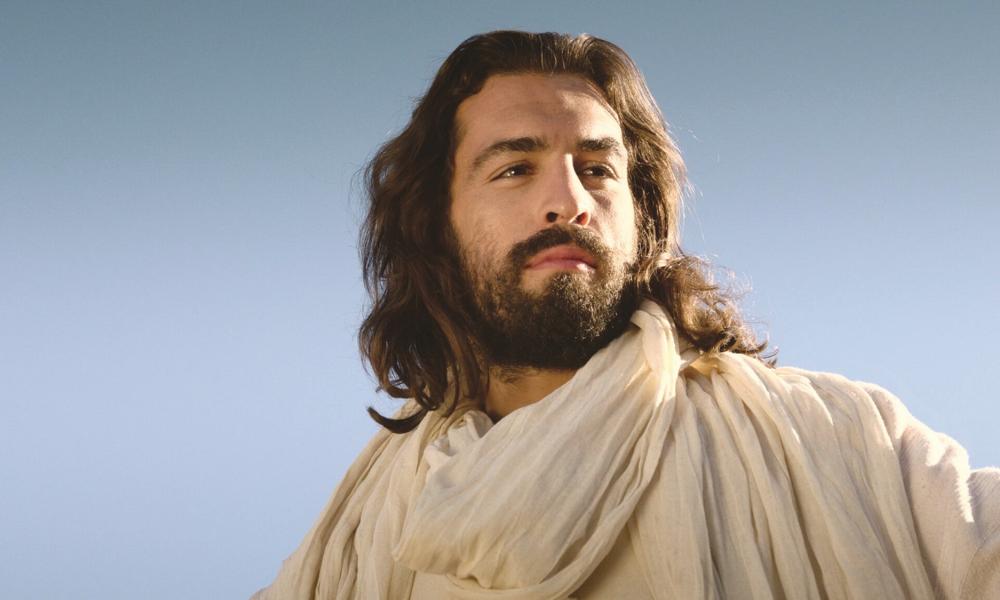
Was Jesus black?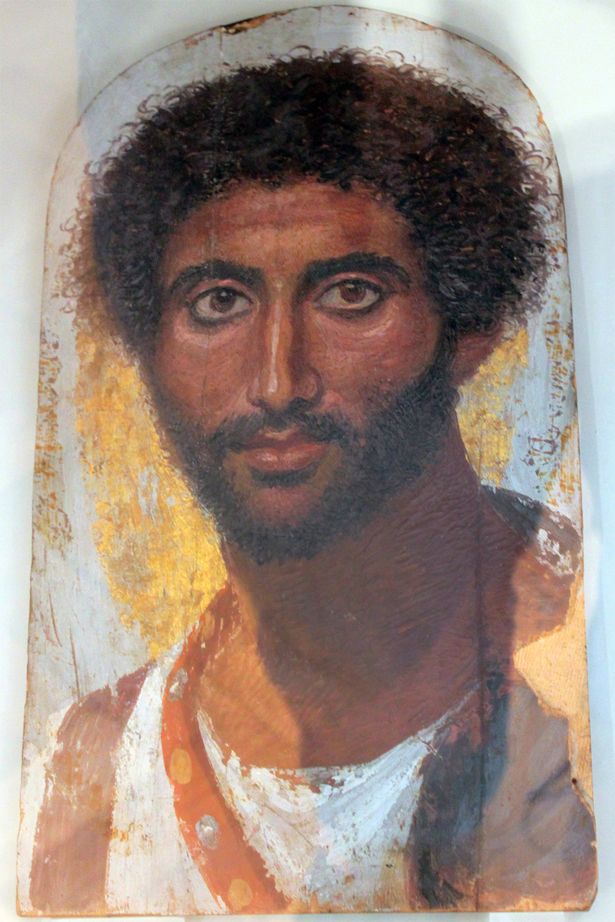
Recently a young priest appointed to a parish got rid of any amount of statues that he regarded as cluttering up the church! Can you image the consternation of some.
I have accumulated a number of quotes encapsulating different points of view. Perhaps you may find them of interest?
Over the last few days I have been pondering over this question of the relevance and purposed of statues etc. I remembered a Biblical reference:
The second commandment :Exodus 2 ‘You shall not make for yourself an idol, or any likeness of what is in heaven above or on the earth beneath or in the water under the earth. You shall not worship them or serve them.’ This refers back to the first commandment, “You shall have no other gods before Me,” and specifically forbids the creation of idols.
A graven image is an image carved out of stone, wood, or metal. It could be a statue of a person or animal, or a relief carving in a wall or pole. It is differentiated from a molten image, which is melted metal poured into a cast. Abstract Ashram poles carved wooden Ba’als covered in gold leaf, and etchings of gods accompanying Egyptian hieroglyphics are all graven images.
This reminder led to further investigations.
Statuomania.
An insightful way of answering this question is to examine the attitudes of past societies to their public monuments. Developments in 19th-century Europe, in particular, have the potential to unlock a fresh vantage point onto this contemporary issue. In that era, many political communities pursued state-building programmes that involved appropriating history to serve interests in the present. Nations devoted substantial energy and resources to commemorating heroes from the past in monumental form. Helke Rausch’s important work on the political uses of statues in European capitals between 1848 and 1914 shows that major cities received dozens of new monuments: Paris gained 78 new statues, Berlin 59 and London 61. With good reason, historians often characterise the 19th century as an age of ‘statuomania’.
Statues can teach us about history, but they do not convey some immutable truth from the past. Instead, they are symbolic of the fixed ideas of a specific community regarding its past, as captured at a particular point in time.
Disputes have also been caused by people interpreting monuments in different ways. On the one hand are those who regard them as embodying some essential and imperishable historical certainty. On the other are observers who are able – and willing – to look beyond a particular statue to a more complex and contestable past reality. The latter are better poised to recognise that outmoded and divisive political values embodied in any monument belong in one place and one place alone: the past.
Iconoclasm
The “Second Iconoclasm” was between 814 and 842. According to the traditional view, Byzantine Iconoclasm was started by a ban on religious images by Emperor Leo III and continued under his successors. It was accompanied by widespread destruction of images and persecution of supporters of the veneration of images. The pope remained firmly in support of the use of images throughout the period, and the whole episode widened the growing divergence between the Byzantine and Carolingian traditions in what was still a unified church, as well as facilitating the reduction or removal of Byzantine political control over parts of Italy.
Judaism‘s animosity towards what they perceived as idolatry was inherited by Jewish Christianity. Although Jesus discussed the Mosaic Law in the Sermon on the Mount, he does not speak of issues regarding the meaning of the commandment against idolatry. His teachings, however, uphold that worship should be directed to God alone (Matthew 4:10 which is itself a quote of Deuteronomy 6:13, see also Shema in Christianity, Great Commandment, and Ministry of Jesus).
The image of “The Good Shepherd“, a beardless youth in pastoral scenes collecting sheep, was the most common of these images, and was probably not understood as a portrait of the historical Jesus. The depiction of Jesus already from the 3rd century included images very similar to what became the traditional image of Jesus, with a longish face and long straight hair. As the Church increased in size and popularity, the need to educate illiterate converts led to the use of pictures which portrayed biblical stories, along with images of saints, angels, prophets, and the Cross (though only portrayed in a bejewelled, glorified state).
Adrian Fortescue sums up Church teaching: “We should give to relics, crucifixes and holy pictures a relative honour, as they relate to Christ and his saints and are memorials of them. We do not pray to relics or images, for they can neither see nor hear nor help us.”[22]
The Seventh Ecumenical Council, the Second Council of Nicaea in 787, which rejected iconoclasm and restored the veneration of icons in the churches, was not part of the tradition received by the Reformation. Lutherans, however, rejected the iconoclasm of the 16th century, and affirmed the distinction between adoration due to the Triune God alone and all other forms of veneration
John Calvin, the progenitor of the Reformed tradition of Christianity that influenced the Continental Reformed, Congregational, Anglican and Presbyterian traditions,[29] was always extremely hostile to all publicly displayed religious images, which were systematically destroyed by Calvinists, as in the Beeldenstorm in the Netherlands.[30] Towards the end of the 16th century there were disputes between Lutherans and Calvinists, with the Lutherans offering strong opposition to Calvinist iconoclasm.[31][32] Though both groupings did not object to book illustrations or prints of biblical events, or portraits of reformers, production of large-scale religious art virtually ceased in Protestant regions after about 1540, and artists shifted to secular subjects, ironically often including revived classical mythology.
Non-use by Amish[edit]
The Amish are an Anabaptist Christian group that forbids the use of images in secular life. In their critiques these groups argue that such practices are in effect little different from idolatry, and that they localize and particularize God, who, they argue, is beyond human depiction
A wooden statue of a pregnant woman is pictured in the Church of St. Mary in Traspontina as part of exhibits on the Amazon region during the Synod of Bishops for the Amazon in Rome Oct. 18, 2019. Several copies of the statue were stolen from the church and thrown into the Tiber River Oct. 21. (CNS photo/Paul Haring)
I was a prisoner of the Catholic Church for 26 years and have many Catholic friends and family, but one day I read in the Bible Deuteronomy 4:15-16: “So watch yourselves carefully, since you did not see any form on the day the LORD spoke to you at Horeb from the midst of the fire, so that you do not act corruptly and make a graven image for yourselves in the form of any figure, the likeness of male or female ..” God forbids any kind of graven images BEFORE Pachamama! Then I read the commandments specifically Exodus 20:4 where God prohibits ANY kind of graven images. Therefore the Catholic Church opened the gates to idolatry long time BEFORE Pachamama!!! Where does all this commotion coming from???!!! Praise Yahweh I’m His prisoner now!!!
Afterwards Saint Francis took action to physically repair the structure of the San Damiano church, although he eventually realised that God’s message to him was to restore the entire Catholic Church as a whole body rather than literally repair one stone structure.
Francis of Assisi. Francis (1181/2-1226) was scrawny and plain-looking. He wore a filthy tunic, with a piece of rope as a belt, and no shoes. While preaching, he often would dance, weep, make animal sounds, strip to his underwear, or play the zither.
Other rings symbolise a commitment, such as marriage. A pastor, by definition, is a clergyman who works within either a Catholic, Orthodox or Protestant church (i.e., a minister or a priest).
At first, St. Francis interpreted this revelation as an instruction for him to physically rebuild the dilapidated little church, which he eagerly did for some time: brick by brick. But over time he began to realize the broader implications of Christ’s exhortation to him from the cross. It would seem that ultimately God was less concerned about the physical structures of this or that particular worship space and more interested in spiritual and moral renewal, a rebuilding of the church that is the Body of Christ. St. Francis’ whole manner of living became focused on renewing the embodied, daily experience of Christian life by prioritising the fundamentals of Gospel values in service to the poor, forgotten, voiceless and abandoned in his own time and context.
[there is] nothing like a likeness of Him.” This is taken by Muslims to mean that Allah cannot be captured in an image by human hand, such is his beauty and grandeur. To attempt such a thing is seen as an insult to Allah. The same is believed to apply to Muhammad.
Allah is considered to be beyond human understanding and therefore cannot be portrayed. Pictures or statues of other human figures are avoided because they could mistakenly be worshipped, which would be idolatry or shirk , which is one of the gravest sins in Islam.
Churches often have statues of Mary and some saints. Catholics do not worship Mary or the saints, but ask them to pray to God on their behalf. This is known as intercession. Statues can also help to focus a person’s mind on an aspect of prayer or worship
The definition of idolatry has been a contested topic within Abrahamic religions, with many Muslims and Protestant Christians condemning the Catholic veneration and statues of the Virgin Mary in many churches as a form of idolatry. The history of religions has been marked with accusations and denials of idolatry.
Idolatry is the worship of an idol or cult image, being a physical image, such as a statue, or a person in place of God. In Abrahamic religions, namely Judaism, Christianity and Islam, idolatry connotes the worship of something or someone other than God as if it were God
Many churches and cultures do depict Jesus as a brown or black man. Orthodox Christians usually have a very different iconography to that of European art – if you enter a church in Africa, you’ll likely see an African Jesus on display.
But these are rarely the images we see in Australian Protestant and Catholic churches, and it is our loss. It allows the mainstream Christian community to separate their devotion to Jesus from compassionate regard for those who look different.
Jesus was not white. You’d be forgiven for thinking otherwise if you’ve ever entered a Western church or visited an art gallery. But while there is no physical description of him in the Bible, there is also no doubt that the historical Jesus, the man who was executed by the Roman State in the first century CE, was a brown-skinned, Middle Eastern Jew.
I would even go so far as to say it creates a cognitive disconnect, where one can feel deep affection for Jesus but little empathy for a Middle Eastern person. It likewise has implications for the theological claim that humans are made in God’s image. If God is always imaged as white, then the default human becomes white and such thinking undergirds racism.
Historically, the whitewashing of Jesus contributed to Christians being some of the worst perpetrators of anti-Semitism and it continues to manifest in the “othering” of non-Anglo Saxon Australians.
The concept of the religious symbol also embraces an abundantly wide variety of types and meanings. Allegory, personifications, figures, analogies, metaphors, parables, pictures (or, more exactly, pictorial representations of ideas), signs, emblems as individually conceived, artificial symbols with an added verbal meaning, and attributes as a mark used to distinguish certain persons all are formal, historical, literary, and artificial categories of the symbolical. If one looks for a definable common denominator for the various types of symbols, one could perhaps choose the term “meaning picture” or “meaning sign” to best describe the revealing and at the same time the concealing aspects of religious experience. The symbol (religious and other) is intended primarily for the circle of the initiated and involves the acknowledgment of the experience that it expresses. The symbol is not, however, kept hidden in meaning; to some extent, it even has a revelatory character (i.e., it goes beyond the obvious meaning for those who contemplate its depths). It indicates the need for communication and yet conceals the details and innermost aspects of its contents.
Different forms and levels of the experience of and relationship to reality (both sacred and profane) are linked with the concepts of symbol, sign, and picture. The function of the symbol is to represent a reality or a truth and to reveal them either instantaneously or gradually. The relationship of the symbol to a reality is conceived of as somewhat direct and intimate and also as somewhat indirect and distant. The symbol is sometimes identified with the reality that it represents and sometimes regarded as a pure transparency of it. As a “sign” or “picture” the representation of the experience of and relationship to reality has either a denotative or a truly representative meaning. The doctrine of the eucharistic (sacramental) presence of Christ in the teachings of Eastern Orthodoxy, Roman Catholicism, and the Protestant Reformers concretely demonstrate the various and extensive levels of symbolical understandings. These levels extend all the way from the concept of physical identity in the transubstantiation theory of Roman Catholicism (in which the substance of breadness and wineness is believed to be changed into the body and blood of Christ, though the properties of the elements remain the same) through Martin Luther’s Real Presence theory (in which Christ is viewed as present, though the question of how is not answered because the question of why he is present is considered more important), and Huldrych Zwingli’s sign (symbolic or memorial) theory, to the concept of mere allusion. The concept of the symbol, however, includes all these interpretations.
In religion, a relic usually consists of the physical remains of a saint or the personal effects of the saint or venerated person preserved for purposes of veneration as a tangible memorial. Relics are an important aspect of some forms of Buddhism, Christianity, Hinduism, Islam, Shamanism, and many other religions.
Plaques
The Dead Comics’ Society installs blue plaques to commemorate the former residences of well-known comedians, including those of Sid James and John Le Mesurier. In 2003, the London Borough of Southwark started a plaque scheme which included living people in the awards. Even in London, the Westminster City Council runs a green plaque scheme which is run alongside that of the blue plaque scheme administered by English Heritage. Other schemes are run by civic societies, district or town councils, or local history groups, and often operate with different criteria.[19][20]
In England, the London blue plaques scheme, which is administered by English Heritage, has been running for over 140 years and is thought to be the oldest of its kind in the world. Plaques are attached to buildings to commemorate their association with important occupants or events.[21]
Many statues are built on commission to commemorate a historical event, or the life of an influential person. Many statues are intended as public art, exhibited outdoors or in public buildings. Some statues gain fame in their own right, separate from the person or concept they represent, as with the Statue of Liberty.